The three tabs
One dock, one pin rail, three editors. The rail never says which module an editor belongs to, and you never need to know: Pixel is the sprite editor, SFX and Tracker share one synth.
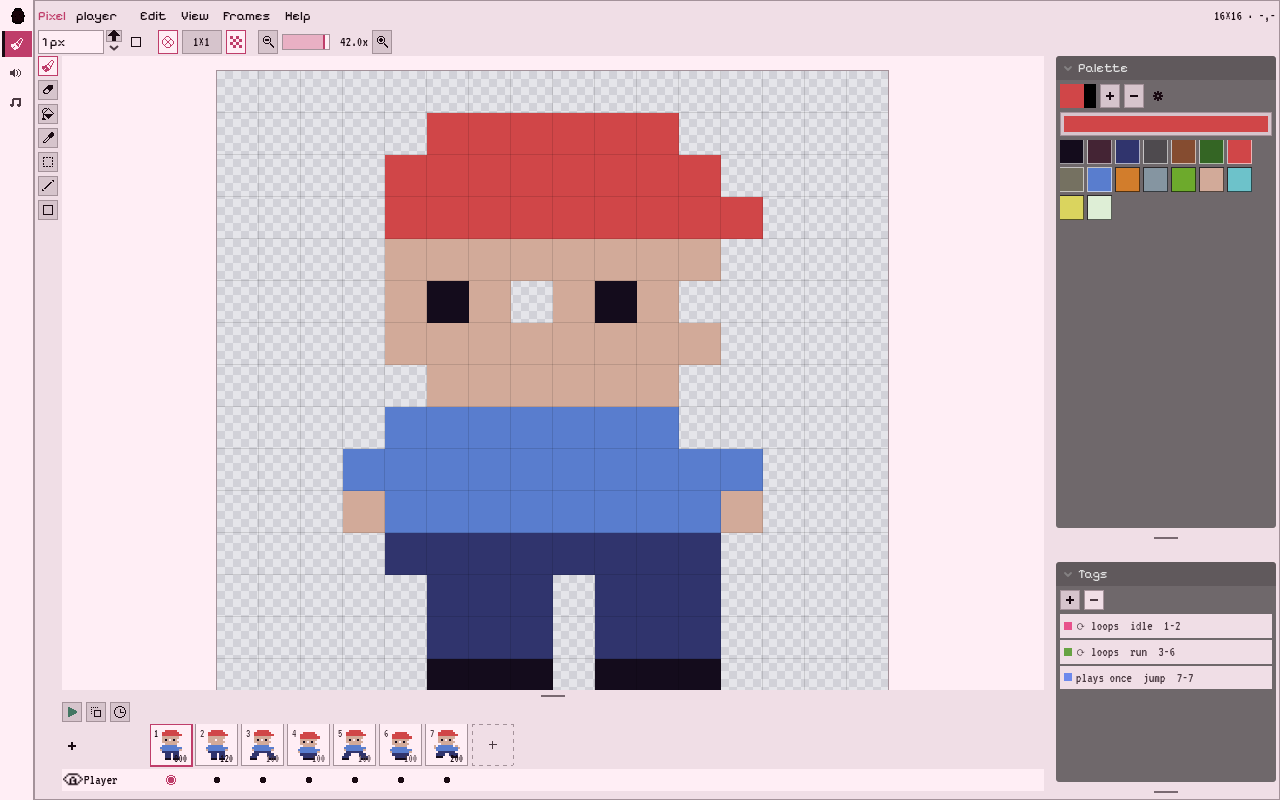
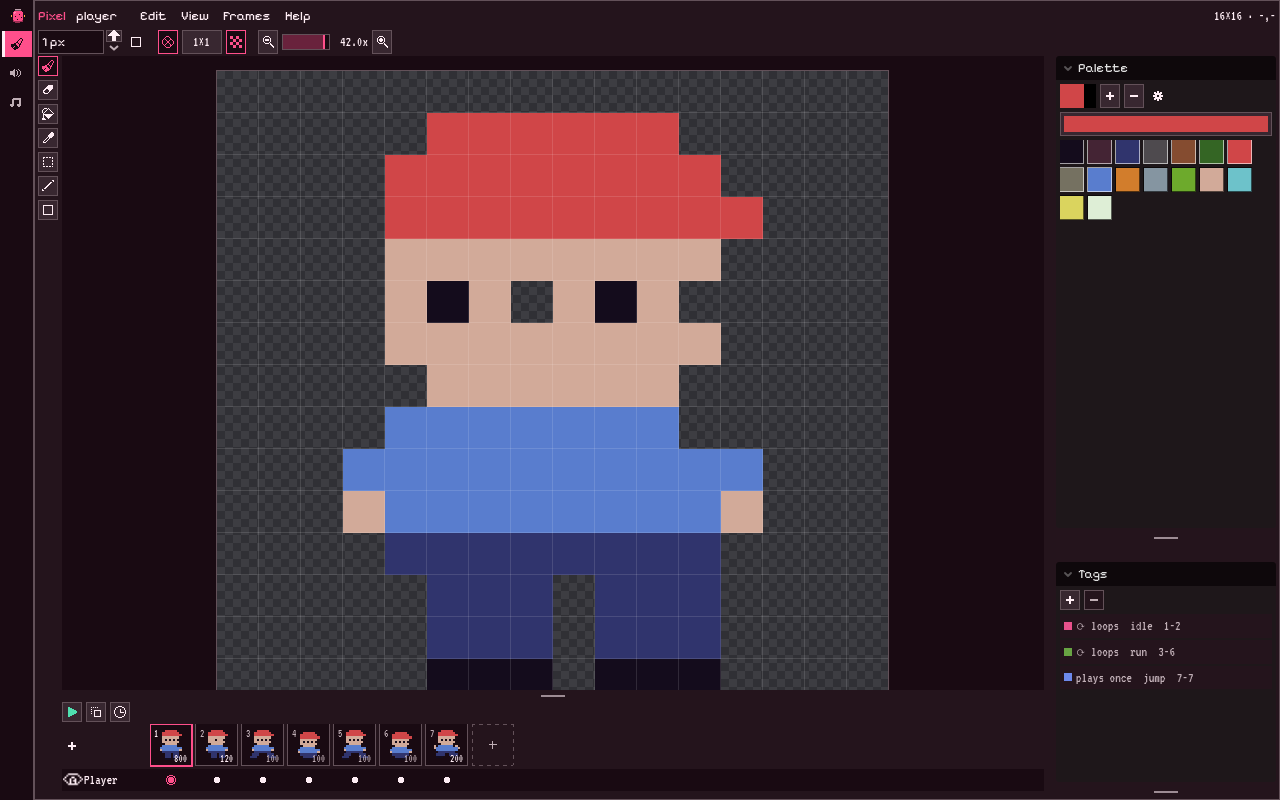
A sprite editor. Layers with opacity and visibility, frames with their own durations, onion skin, a palette that lives in the document, animation tags that name a range of frames, and an undo history of its own. Pencil, eraser, fill, picker, selection, line, rectangle and ellipse, each on a key.
A document is a .pixel.tres. Export it as a PNG, as a sheet with a SpriteFrames beside it, one animation per tag, or as an Aseprite file that Aseprite opens with the layers, tags and durations intact. Or put a PixelSprite2D in a scene, hand it the document, and it draws and animates it as you edit.


A sound generator. Pick the action, Tick, Confirm, Deny, Pickup, Jump, Hit, Boom, Swell, Warn or Drop, roll a new one, then bend it on a rack of sliders until it’s the sound you meant. The action sets the shape and every roll picks a new character, so ten Jumps are ten different sounds that all jump. Random rolls everything. A document is a .sfx.tres; the export is a .wav. Or add a ChiptunePlayer to the scene, point it at the document, and it renders the sound itself and follows every edit.
Tracker
Section titled “Tracker”

A pattern tracker over the same synth. Patterns of rows, a handful of channels, instruments built from the SFX engine’s oscillators and envelopes, and an instrument palette you can save and share between songs. A song is a .music.tres; the export is a .wav. A ChiptuneMusicPlayer plays the document and loops it without a gap; a song changed from a script is heard again after rerender().
F1 in any tab lists its keys. The same list is on the reference page, read from the same table.

JamChip 0.1.0, by GlitterSnack. MIT licence. Built from the source on every merge, artwork and screenshots included, with JamChip.