Make all of a retro game's art and sound inside Godot.
Making a small game means bouncing between tools. Draw in one, make sounds in another, export, import, fix the import settings, then go back and change one pixel and do it all again. JamChip puts the art and sound tools inside Godot so you can skip all that.
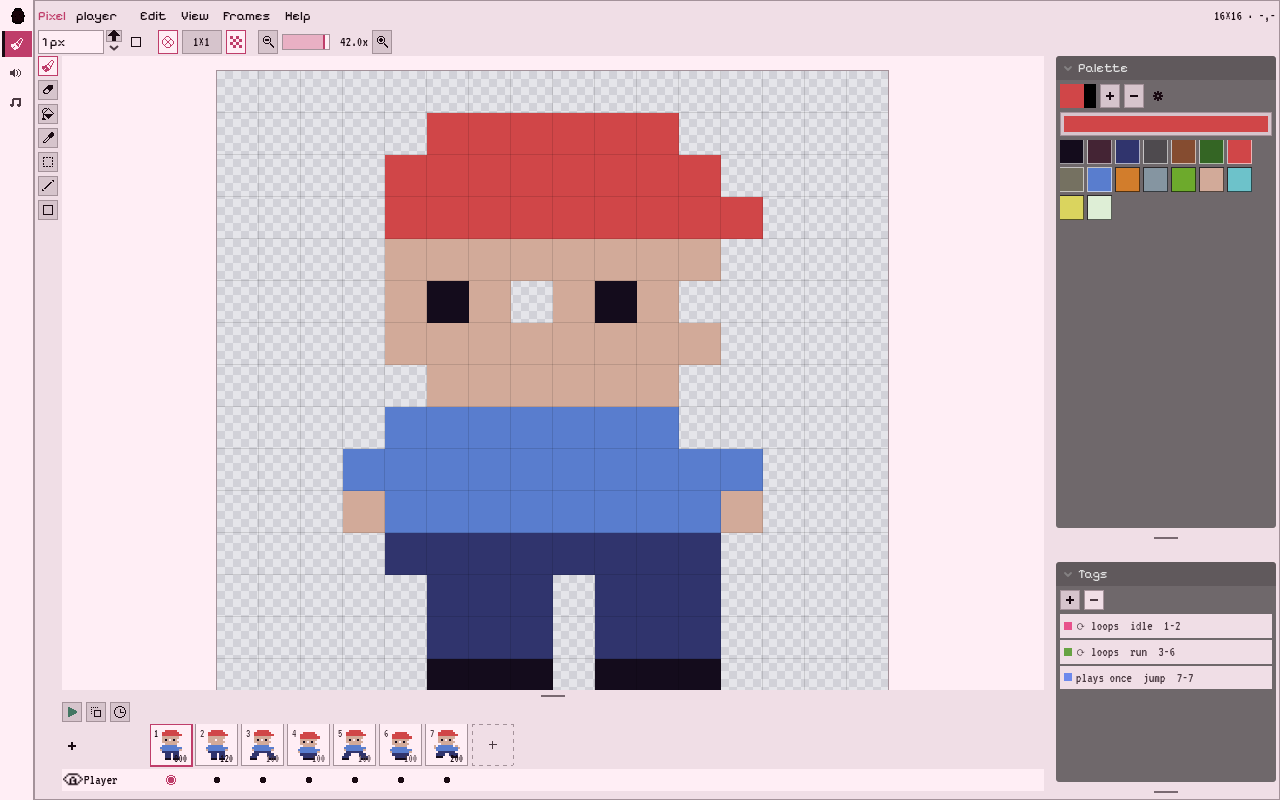
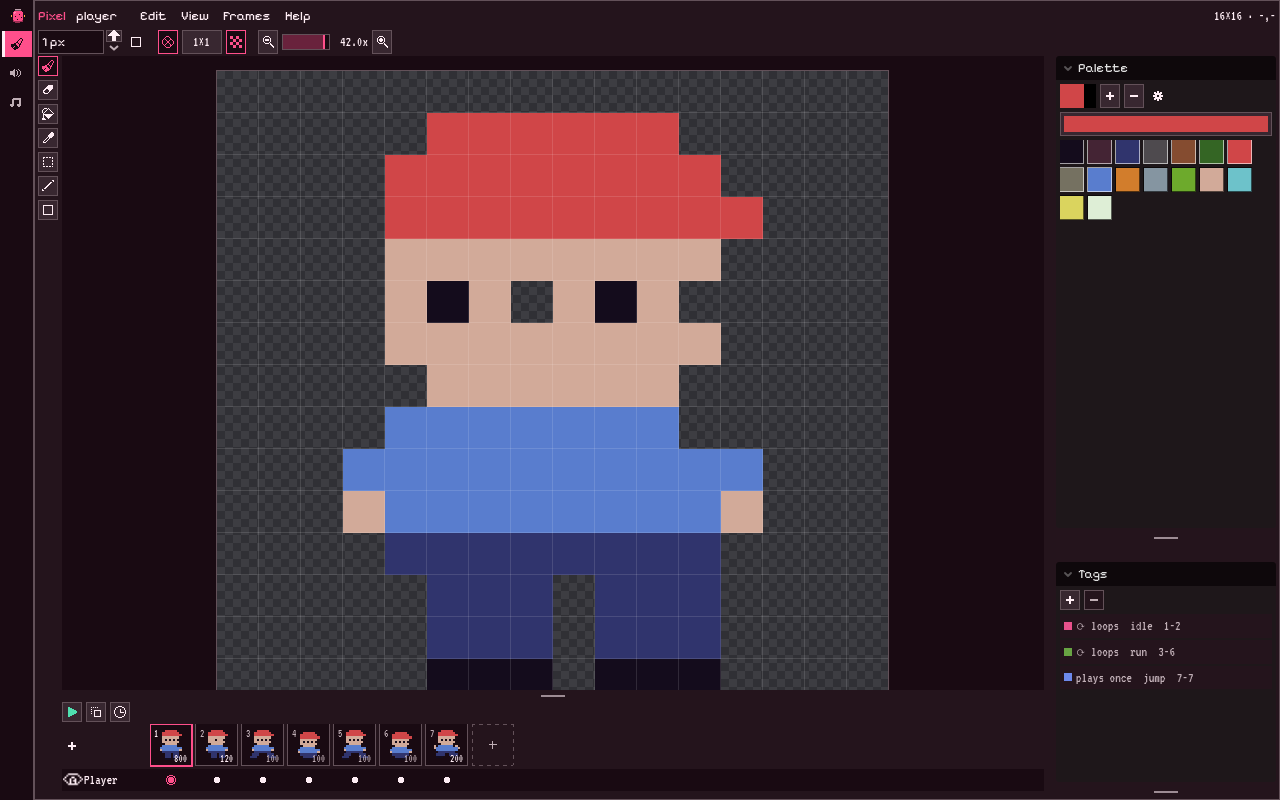
You don’t leave the editor.
Draw a sprite and the game shows it. Change the song and the node plays the new one.
It’s all in one place.
Pixel art, sound effects, music, tiles now. Fonts and more as they come.
Nothing extra ships with your game.
Everything exports to PNG, SpriteFrames, TileSet, WAV.
What it costs
Nothing. Free, MIT, no account, phones nowhere. Godot 4.7 or newer.
Install
- Download the zip from the latest release.
- Copy
addons/jamchip/into your project. - Turn on JamChip under Project → Project Settings → Plugins.
A dock appears with a pin rail. Click a pin, or press Ctrl+1, Ctrl+2 or Ctrl+3, for Pixel, SFX or Tracker. The three tabs says what each one does.
Install JamChip 0.1.0It’s early. Two jam games have been built with it; the first said “promising but not ready” and the changelog is what that verdict has turned into since.

JamChip 0.1.0, by GlitterSnack. MIT licence. Built from the source on every merge, artwork and screenshots included, with JamChip.